
Best overall: the service whose confirmed limit covers your transfer and whose payout method suits your recipient. Best for wallet recipients: a service that supports the intended GCash payout. Best value: the eligible quote that delivers the most PHP for the same total SGD debit. This 2026 guide compares Wise, Instarem, Remitly and Revolut without treating an advertised maximum as a guaranteed Singapore-to-Philippines allowance.
- FinPayWise helps Singapore-based Filipino workers compare remittance fees, exchange rates and delivery speeds.
- For money transfer services highest transfer limit singapore to philippines searches, compare confirmed route-specific limits, not headline ceilings.
- Wise, Instarem, Remitly and Revolut belong on your comparison shortlist; confirm eligibility before comparing recipient amounts.
- Choose the payout method first: an app’s sending limit does not establish the recipient’s wallet capacity.
Why transfer limits matter
A high advertised limit is useful only if you can actually send your intended amount. Your account status, payment method, destination and recipient's receiving method all belong in that decision.
FinPayWise is an independent comparison site for Singapore-based Filipino workers sending remittances to the Philippines. Its role is to help you compare fees, exchange rates and delivery speeds—not to approve transfers or set provider limits.
For a large remittance in 2026, start with eligibility rather than the exchange rate. A quote that cannot accept your amount is not an alternative, however attractive the displayed conversion looks. Equally, a high ceiling does not compensate for a payout method your family cannot use.
What makes the best high-limit transfer service?
Use these criteria before choosing an app:
- Route-specific allowance: Check the maximum for sending from Singapore to the Philippines, not a maximum for another country or currency.
- Account eligibility: Establish whether the quoted allowance applies to your current verification status.
- Funding method: Confirm that your selected payment method supports the intended debit and that your bank permits it.
- Receiving capacity: Check the beneficiary account or wallet requirements separately from the sender's allowance.
- Total recipient amount: Compare the PHP delivered for the same total SGD debit, rather than the exchange rate alone.
- Delivery conditions: Read the estimate attached to your actual transfer, including any verification or funding conditions.
The best high-limit service is the one that accepts your complete transfer setup—not the one with the largest number on a general help page. Treat a published ceiling as a screening tool; use the applicable account and route conditions to make the decision.
Money transfer apps at a glance
The order below is a decision checklist, not a numerical ranking of maximum allowances. Each provider has a distinct comparison role; the final winner depends on the transfer you can actually submit.
| Order | Service | Best for: comparison role | What to examine | Key limitation of this approach |
|---|---|---|---|---|
| 1 | Wise | Establishing a bank-payout baseline | Your intended amount, funding method and recipient-account details | A general limit does not establish your personal allowance |
| 2 | Instarem | Checking a repeat-remittance alternative | A fresh quote for the same sender debit and payout setup | An earlier successful transfer does not confirm a larger transfer |
| 3 | Remitly | Reviewing recipient-delivery requirements | The intended payout method, recipient details and current estimate | Sender eligibility and receiving eligibility are separate checks |
| 4 | Revolut | Evaluating an existing-account route | Whether the account supports the intended destination and amount | Having an account does not prove the proposed transfer is eligible |
These roles organise your research. They do not claim that Wise has the highest limit, Instarem has the lowest fees, Remitly is the fastest, or Revolut supports every proposed payout arrangement.
1. Wise: best for a bank-payout comparison baseline
Use Wise as an initial candidate when you want to assess a transfer to a Philippine bank account. Enter your intended amount and check the applicable route and funding requirements before treating the quote as a usable option.
The useful baseline is the complete transaction: total SGD debit, PHP received, recipient details and delivery estimate. A conversion rate by itself leaves too much of the decision unanswered.
Wise comparison pros:
- Establishes a named candidate against which to compare other quotes.
- Keeps the bank-payout check separate from wallet receiving limits.
- Gives you a consistent transfer setup to reproduce elsewhere.
Wise comparison cons:
- A public maximum is not proof of your account's allowance.
- A quote does not remove the need to check funding restrictions.
- Bank-account details still need confirmation with the recipient.
Best for: Senders building a bank-payout baseline before considering other services.
In 2026, compare the quote you can obtain for your intended transfer rather than an old screenshot or a rate someone else received. Keep the recipient and total debit consistent across the shortlist.
Verdict: Hold until Wise confirms the intended amount, funding method and payout setup.
2. Instarem: best for checking a repeat-remittance alternative
Place Instarem next in your comparison when you regularly send money home and want an alternative to assess alongside your usual service. Recreate the same transaction rather than comparing different amounts or different payout methods.
For repeat remittances, the important question is whether the current transfer works under the current conditions. A previous payment is a useful reference, but it does not establish the allowance or delivery estimate for your next payment.
Instarem comparison pros:
- Adds another named provider to your like-for-like comparison.
- Encourages a fresh check instead of relying on your usual choice.
- Fits a recurring decision process using the same recipient setup.
Instarem comparison cons:
- A past successful transfer does not establish a higher current limit.
- Comparing different total debits produces an unreliable value comparison.
- Changing the receiving method changes the transaction being assessed.
Best for: Repeat senders checking whether another eligible quote better suits the next remittance.
Separate routine payments from exceptional large transfers. Your usual remittance process should not replace an amount-specific check when the transfer changes substantially.
Verdict: Hold until Instarem's current quote covers the full intended transfer.
3. Remitly: best for reviewing recipient-delivery requirements
Use Remitly as a candidate when the recipient's receiving method drives your decision. Check whether the proposed Singapore-to-Philippines transfer supports that exact method before assessing the sender's maximum.
Recipient delivery is not a minor detail. A transfer that fits the sender's allowance still needs a valid receiving destination and correctly entered beneficiary information.
Remitly comparison pros:
- Provides another named service to assess against your recipient's requirements.
- Keeps the payout method central to the comparison.
- Encourages checking the delivery estimate for the actual transaction.
Remitly comparison cons:
- Sender-side eligibility alone does not settle recipient eligibility.
- A delivery estimate must be read with its stated conditions.
- General service information does not establish every route-and-payout combination.
Best for: Senders whose family needs a particular receiving method rather than simply any transfer destination.
If your recipient wants GCash, check the intended wallet and payout requirements specifically. Do not use a bank-transfer allowance as evidence that a wallet payout can receive the same amount.
Verdict: Hold until Remitly confirms the recipient method and intended amount together.
4. Revolut: best for assessing an existing-account option
Consider Revolut if you already use it and want to establish whether it supports your proposed remittance. Check the destination, recipient details, amount and applicable account conditions before making it part of your final comparison.
An existing account reduces neither the need for route checks nor the need for a comparable quote. Familiarity is a convenience; it is not evidence of a higher Singapore-to-Philippines allowance.
Revolut comparison pros:
- Adds an existing-account candidate if you already use the service.
- Lets you assess a familiar option against dedicated remittance candidates.
- Encourages checking account-specific conditions before making a decision.
Revolut comparison cons:
- Account ownership does not establish eligibility for the intended transfer.
- A general international-transfer feature does not confirm every payout method.
- Familiarity alone does not demonstrate a better recipient amount.
Best for: Existing users deciding whether their account belongs in the remittance shortlist.
For your 2026 comparison, keep Revolut only if the proposed transaction meets the relevant conditions. Do not choose it merely to avoid checking another provider.
Verdict: Hold until Revolut confirms that the complete transfer is supported.
How to check your usable transfer limit
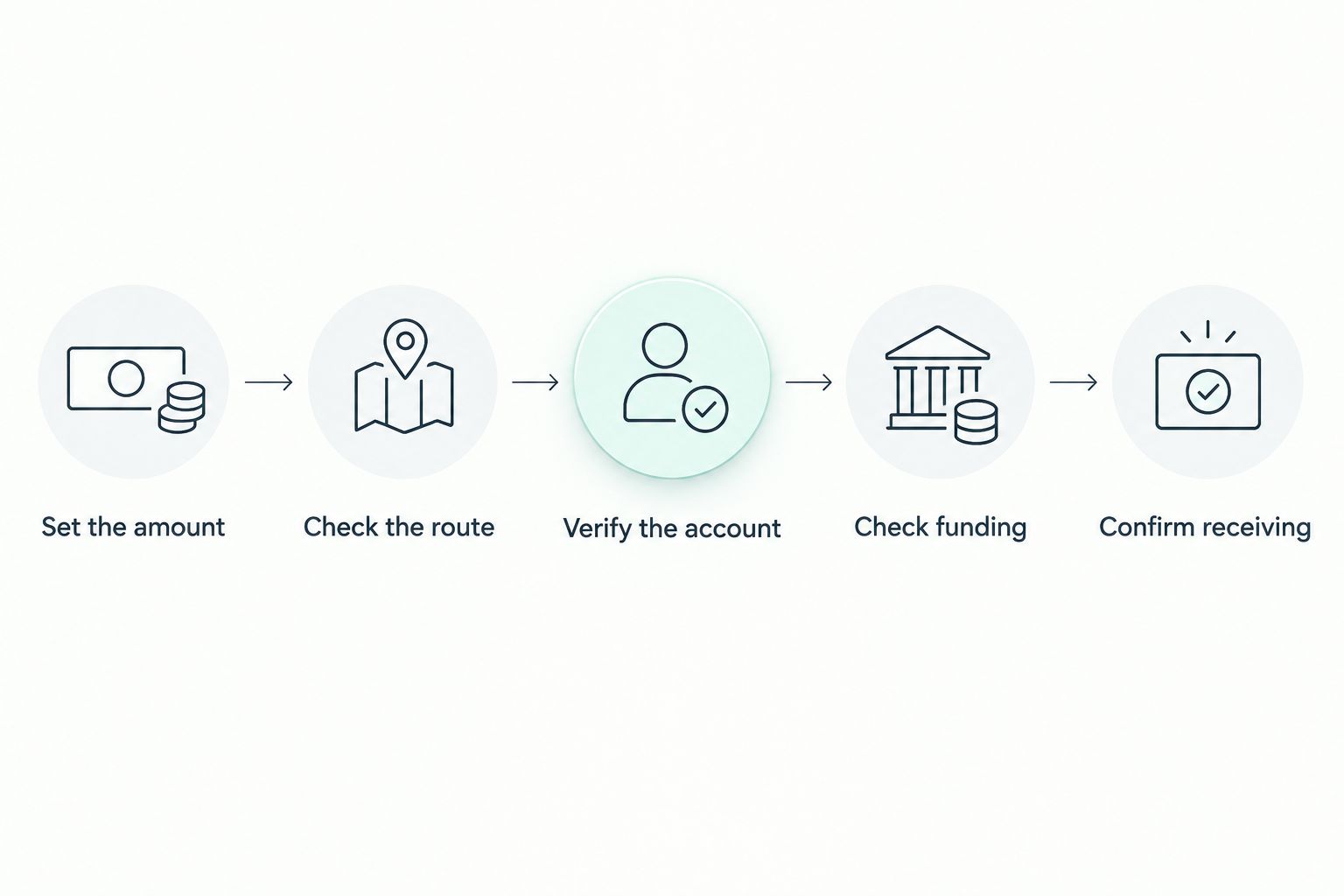
Follow this sequence before funding a large remittance:
- Set the amount. Decide the total SGD debit you intend to authorise and the receiving method your recipient needs.
- Check the route. Select Singapore as the sending country and the Philippines as the destination. Confirm the relevant currencies and payout method.
- Verify the account. Review your account's verification status and any requirements attached to the intended amount.
- Check funding. Confirm both the provider's funding conditions and your own bank's applicable payment restrictions.
- Confirm receiving. Check the recipient's details and the receiving account or wallet conditions before authorising payment.
The sequence prevents a common comparison error: choosing a headline limit first and discovering a funding or receiving restriction later. Complete these checks before treating any provider as the winner.
Read the provider's current transfer conditions alongside the quote. If the account displays a restriction, resolve it through the provider's official support process rather than assuming a general help-page maximum overrides it.
Compare value only after checking eligibility
Once the transfer setup qualifies, compare the total SGD debit and the PHP delivered. Keep the receiving method the same so that each quote answers the same question.
Record the delivery estimate and its conditions next to the recipient amount. The quote that delivers more PHP is not automatically the right choice when your family needs the money by a specific deadline.
Avoid these comparison shortcuts:
- Comparing exchange rates while ignoring fees deducted from the transfer.
- Comparing different sender debits as though the recipient totals are equivalent.
- Treating an estimated arrival time as an unconditional promise.
- Applying a wallet payout condition to a bank-account transfer, or the reverse.
FinPayWise is an independent remittance comparison site for Singapore-based Filipino workers comparing fees, exchange rates and delivery speeds. Use that comparison purpose to separate eligibility, value and timing instead of reducing the decision to one advertised limit.
How this shortlist is ordered
Wise comes first as a bank-payout baseline, Instarem as a repeat-remittance alternative, Remitly as a recipient-method check and Revolut as an existing-account assessment. The order describes how to organise your comparison, not a tested ranking of numerical ceilings.
The criteria are route-specific eligibility, account status, funding conditions, receiving capacity, recipient amount and delivery conditions. A provider belongs in your final shortlist only when the complete transaction passes those checks.
Which transfer service should you choose?
Choose the eligible quote that suits your recipient and delivers the strongest PHP outcome for your intended total SGD debit. Check its delivery conditions before authorising payment.
For an undecided sender in 2026, start with the receiving method, then compare the named providers that support your complete setup. This is a more useful default than selecting an app because it advertises a large maximum somewhere in its documentation.
Do not split a transfer to bypass a restriction. Ask the provider to explain the applicable limit and the approved process for your intended payment.
FAQ
Which money transfer service has the highest Singapore-to-Philippines limit?
Choose by the limit applicable to your account, route, funding method and payout setup—not a general advertised maximum. Compare Wise, Instarem, Remitly and Revolut only after confirming that each supports your intended transaction.
Is Wise better than Instarem for a large remittance?
Wise is the better choice only when its eligible quote better meets your transfer requirements. Compare the same total SGD debit, recipient method, PHP amount and delivery conditions with Instarem.
Does a higher transfer limit mean my family receives more pesos?
No. A transfer limit controls the permitted amount, while the exchange rate and applicable fees determine the recipient amount for a given sender debit.
Can I use a bank-transfer limit for a GCash payout?
No. Check the intended GCash payout requirements and the recipient wallet’s receiving conditions separately; a bank-transfer allowance does not establish wallet capacity.
Why is my account limit different from an advertised maximum?
An advertised maximum does not necessarily describe every account and transaction setup. Check the conditions for your verification status, sending country, destination, funding method and payout method.
Should I split a large remittance into smaller transfers?
Do not split a remittance to bypass a restriction. Confirm the provider’s approved process and applicable conditions for the full intended payment.
What should I check before sending a large remittance in 2026?
Confirm the route, account eligibility, funding conditions and recipient receiving requirements first. Then compare the PHP delivered for the same total SGD debit and read the delivery estimate’s conditions.
One last thing
Check both ends of the transfer before moving the money. The sender's allowance and the recipient's receiving conditions answer different questions; neither replaces the other.
Use FinPayWise for remittance comparison, then confirm the final transaction conditions directly with your chosen provider. A useful limit is one that applies to the payment you are about to make.
Related guides
- Remittance exchange rates and total cost comparison
- Send money from Singapore to the Philippines
- Send money to GCash from Singapore checklist